
SpaceX's Starship: A Technological Revolution for Space Exploration
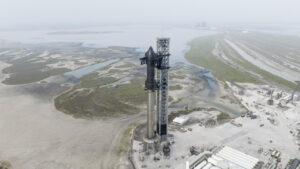
Starship is one of the most ambitious technology projects of our time. Designed by SpaceX as a fully reusable launch vehicle capable of carrying more than 150 tons into low Earth orbit, it aims to transform access to space, manned exploration, and, ultimately, the colonization of Mars. With a height of 120 meters, 33 engines, and a takeoff weight of 5,000 tons, Starship is not simply a more powerful rocket: it is a paradigm shift in the way humanity conceives of space travel.
From Vision Mars to Starship: Twenty Years of Construction
When Elon Musk founded SpaceX in 2002, the goal was clear: to make it possible for humans to settle on Mars. To achieve this, one condition was essential: to reduce the cost of putting payloads into orbit by an order of magnitude. The first steps were called Falcon 1, then Falcon 9, which introduced the partial reuse of the first stage.
The Falcon 9 rocket proves that reuse is not a science fiction dream, but a viable industrial strategy. In 2023, SpaceX reached a new milestone with the first complete flights of the Super Heavy + Starship system. The launch vehicle has unprecedented dimensions and is no longer content with simply improving Falcon: it is a multi-purpose platform designed for Starlink, the Moon, Mars, and beyond.
From Falcon to Starship: the change in scale
Falcon 9: Partial reuse of the first stage, capacity of several tons
into orbit, cost already reduced compared to competitors.
Starship: Goal of complete reuse of both stages,
high cadence, and capacity of 100–150 tons into low orbit.
The goal is no longer just to lower costs, but to change categories.
Technical Architecture: A Fully Reusable Giant
The Starship system consists of two distinct stages, both designed to be recovered, inspected, and reused quickly. This revolutionary architecture breaks with the tradition of single-use launch vehicles that still dominate the space industry.
Anatomy of a two-stage system
Starship System Architecture
- 52 meters high
- 6 Raptor motors (3 SL + 3 Vacuum)
- Ceramic tile heat shield
- Capacity: 100-150 tons in orbit
- 71 meters high
- 33 Raptor engines (13 central + 20 peripheral)
- Takeoff thrust: 7,600 tons
- Captured in flight by Mechazilla tower
The first stage, Super Heavy, acts as the main propulsion system. With its 33 engines arranged in a redundant configuration (13 in the center, 20 on the periphery), it can continue its mission even if several engines fail. This redundancy is crucial for the safety and reliability of the system. After propelling the spacecraft to an altitude of approximately 70 km, Super Heavy separates and makes a controlled return to the launch site.
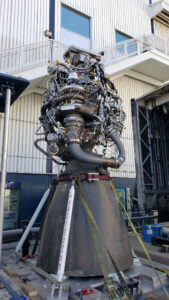
The second stage, the Starship spacecraft itself, takes over. Powered by six engines—three Raptor engines optimized for the atmosphere and three Raptor Vacuum engines with an enlarged nozzle for the vacuum of space—it reaches Earth orbit or continues on to the Moon or Mars. The spacecraft has a heat shield composed of thousands of hexagonal ceramic tiles capable of withstanding temperatures exceeding 1,000°C during atmospheric reentry.
The Raptor engine: an extreme technological challenge
Definition: Rocket engine using a full-flow staged combustion cycle, fueled by methalox (liquid methane + liquid oxygen).
Innovation: All of the fuel passes through two pre-combustion chambers before reaching the main chamber, offering record efficiency and unmatched chamber pressure.
Importance: This technology, long considered unfeasible, enables exceptional performance while maintaining the reliability necessary for reuse.
Significance: This technology, long considered unfeasible,
enables exceptional performance while maintaining the reliability necessary
for reuse.
Reusability at the heart of design
The central goal of the Starship program is rapid reuse. The Super Heavy booster is designed to be caught in flight by the "chopsticks" of the Mechazilla launch tower, eliminating the need for heavy landing gear. The spacecraft, for its part, performs a spectacular maneuver called a "belly flop" during atmospheric reentry: it positions itself horizontally to slow down, then rights itself vertically just before landing.
This approach drastically reduces costs: SpaceX estimates that a launch could eventually cost around $2 million, compared to tens or even hundreds of millions for traditional launch vehicles. If these predictions come true, the cost per kilogram sent into orbit will be extremely competitive compared to all other launch vehicles in the world.
Test Program: From Initial Chaos to Flight 10 Turning Point
The development of Starship follows a radically different philosophy from the traditional approach of the space industry. Rather than years of analysis and simulations before the first flight, SpaceX adopts iterative development: quickly building prototypes, testing them in real conditions, analyzing failures, and improving.
Timeline of major test flights (IFT)
The IFT-10 flight marks a decisive turning point. After the failures of spring 2025, SpaceX demonstrates that the system can perform all the tasks required for lunar and Martian missions . Despite visible damage to the heat shield, all major objectives were achieved, proving the robustness of the design. At the same time, a Raptor engine was successfully reignited in orbit, a key step for maneuvers in space.
🎥 Video: Starship Tests in Action
Discover spectacular images of Starship test flights, from the Mechazilla tower in action to atmospheric reentry maneuvers.
Applications: Much More Than a Rocket to Mars
While Mars remains the ultimate goal, Starship is designed to be a "Swiss Army knife" of space. Its large payload capacity opens up possibilities that were previously impossible. One of the immediate applications concerns the deployment of SpaceX's Starlink constellation.
Next-generation Starlink
- 1.2-ton satellites (vs. 200 kg for Generation 1)
- Deployment of 60 satellites per Starship flight
- Reduced commissioning time from months to weeks
- Direct to Cell connectivity to phones
- Global coverage, areas without network coverage
Multiple applications
- Space stations and habitat modules
- Giant space telescopes (20+ meters)
- Large-scale scientific missions
- In-orbit services and maintenance
- Space tourism and circumlunar flights
Starship as Lunar Lander: The Key Role in Artemis III
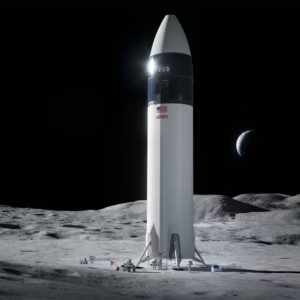
In April 2021, NASA selects a modified version of Starship as the lunar lander for the Artemis III mission. The scenario: four astronauts will take off aboard the SLS rocket in the Orion capsule, dock with the Starship HLS in lunar orbit, two of them will descend to the surface for about a week of exploration at the lunar south pole, then return to Orion for the journey back.
The complexity lies in the logistics of refueling. To send a Starship HLS to the Moon, one would first have to put it into low Earth orbit, then refuel it via a dozen or so flights of additional Super Heavy tanks. This in-orbit fuel transfer operation has never been tested on a large scale: liquid methane and oxygen must be stored at cryogenic temperatures for several days, transferred in zero gravity, and the engines must restart reliably after this period.
In-orbit refueling: a critical challenge
Principle: Transfer several hundred tons of liquid methane and oxygen
between two spacecraft in zero gravity.
Challenges: Cryogenic storage over several days, fluid management
in microgravity, perfect synchronization of orbital rendezvous, reliable engine restart.
Importance: Without this validated capability, it is impossible to send a manned Starship
to the Moon or Mars. It is one of the most critical technologies to demonstrate.
Martian Vision: Towards a Multiplanetary Civilization
SpaceX's ultimate ambition goes far beyond lunar missions: it is to establish a permanent human presence on Mars. In September 2024, SpaceX announced that it would launch the first unmanned cargo missions to Mars as early as 2026, taking advantage of the Earth-Mars transfer window. Five Starships would be sent to test the ability to land intact on Mars.
If these initial cargo missions are successful, SpaceX plans to send the first astronauts to Mars as early as 2029. The first manned mission would carry around 12 people with the aim of building "Mars Base Alpha" and a propellant synthesis plant. This facility would enable fuel to be manufactured locally using groundwater and atmospheric CO₂ via the Sabatier reaction, thereby creating true energy independence on Mars.
Mars roadmap
- 2026: First unmanned cargo missions, landing tests
- 2029: First manned mission (~12 people), construction of Mars Base Alpha
- 2030s: Regular missions during transfer windows (every 26 months)
- Long term: Production of 1,000 Starships per year, more than 10 launches per day
- Ultimate vision: Self-sufficient colony of over one million people
This vision represents an unprecedented qualitative leap in the history of space exploration. To put this ambition into perspective, SpaceX would have to produce as many Starships as there have been rockets launched in the entire history of astronautics. The Starship is not just a rocket, it is the cornerstone of a civilization project.
Impact on the Global Space Industry
If Starship delivers on its promises, the consequences for the space industry could be spectacular. The reduction in launch costs—potentially by a factor of ten— would make space accessible to a much larger number of players. Projects that are currently considered too costly would become viable: commercial space stations, giant telescopes, space factories, and the extraction of lunar or asteroidal resources.
Expected transformations of the space ecosystem
- Cost per kilogram in orbit divided by 10: from ~$2,700/kg (Falcon 9) to ~$200/kg (Starship)
- New generation of massive satellites that are not highly optimized but inexpensive to produce
- Democratized access for SMEs and space startups
- Scientific missions on a scale previously impossible (20-meter telescopes)
- In-orbit manufacturing and maintenance services become economically viable
- Space tourism accessible to a wider clientele
Geopolitically, this reduction in costs would have major implications. For Europe, autonomous launch capability depends on the commercial performance of Ariane launchers. If Starship delivers on its economic promises, it could jeopardize Ariane's commercial viability, thereby compromising Europe's autonomous access to space. China and Russia, on the other hand, would maintain their national capabilities for reasons of sovereignty.
Remaining Challenges and Obstacles to Overcome
Despite recent successes, major technological challenges remain before Starship can serve as a reliable platform for manned missions. Capturing the entire spacecraft with the Mechazilla tower has never been attempted, unlike the booster. This maneuver, planned between flights 13 and 15, is crucial to validate the complete reusability of the system.
The heat shield, despite demonstrating its robustness during Flight 10, still requires improvements. SpaceX continues to optimize the installation and sealing of ceramic tiles to improve the reliability and durability of the system during repeated atmospheric re-entries.
Conclusion: A Revolution in Progress
The Starship represents much more than a simple technological evolution: it is a paradigm shift in our relationship with space. If SpaceX succeeds in realizing its vision of a fully reusable, low-cost launch vehicle, humanity will take a historic step forward comparable to that of commercial aviation in the 20th century.
Major challenges remain, from the reliability of the heat shield to in-orbit refueling, to large-scale industrial production. But the success of the IFT-10 flight shows that the path has been paved. In the years to come, Starship could transform our civilization into a truly multiplanetary species—thus fulfilling the century-old dream of space exploration.