
In the silence of the cosmos, nebulae float like veils of light. These immense clouds of gas and dust form the living canvases on which the destiny of stars is played out. Some give birth to new suns, while others preserve the flaming remains of vanished stars. Thus, they alone embody the eternal cycle of creation and destruction.
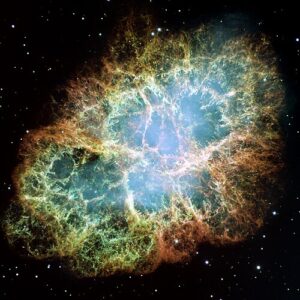
Composed mainly of hydrogen, helium, and silicate particles, nebulae sometimes extend over hundreds of light-years. Illuminated by the radiation of young stars or, conversely, by the explosive death of old ones, they reveal the most spectacular colors in the sky: red fromionized hydrogen, green from oxygen, blue from reflective dust. Each nebula thus appears as a natural painting, created by the fundamental forces of the Universe.
At the heart of diffuse nebulae, where matter appears motionless, the first glimmers of stars are born. These regions, rich in molecular hydrogen, are effectively the lungs of the interstellar medium. Under the effect of gravity, atoms attract each other and clouds collapse. The density gradually increases until protostars form: young suns still enveloped in gas and dust.
This process can take several million years. As gravity compresses the cloud, the temperature at its core rises. When it reaches around 10 million degrees, nuclear fusion reactions begin. Hydrogen becomes helium and releases new light. From that moment on, a star is born. The energy it emits pushes away the matter around it and sculpts the nebula, revealing its flamboyant contours.
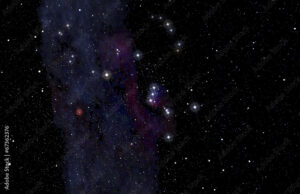
The most active areas then become emission nebulae. The gas there is ionized by ultraviolet photons from young massive stars. It glows red or violet. When the light is only scattered by dust, these are called reflection nebulae. Their colors are softer and bluer.
The most famous is the Orion Nebula. It is visible to the naked eye and located approximately 1,350 light-years away. At its center is the Trapezium, a cluster of stars in formation.
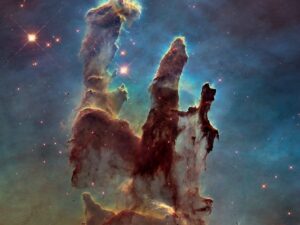
Furthermore, other regions such as the Carina Nebula and theEagle Nebula reveal the same creative forces. Images from the Hubble Telescope have immortalized these landscapes. They are known as the Pillars of Creation.
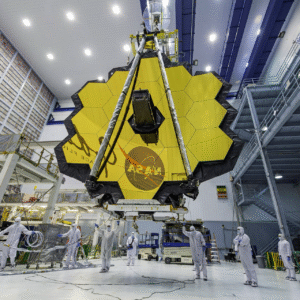
Thanks to modern space telescopes, nebulae are now revealed as never before. The legendary Hubble has revealed the visible beauty of the sky. Its successor, the James Webb Space Telescope (JWST), is exploring the hidden part. Where Hubble observed visible light, James Webb perceivesinfrared. This radiation passes more easily through opaque clouds of cosmic dust.
Positioned 1.5 million kilometers from Earth, at Lagrange point L2, the JWST remains thermally stable. Its primary mirror measures 6.5 meters in diameter and comprises 18 gold-plated hexagonal segments. It collects much more light than its predecessor. As a result, it detects the thermal signatures of very cold objects located at the edge of the observable universe.
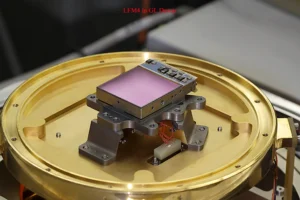
Its instruments—the NIRCam camera and the NIRSpec spectrograph— also analyze the composition of the gas. They reveal stars in the making, still buried in their dust cocoons. The MIRI device captures the heat of dust grains and reveals the structures of interstellar clouds. This allows astronomers to map star-forming regions with remarkable precision.
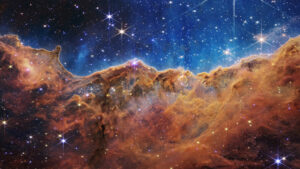
Each observation therefore combines several wavelengths. The result is both scientific and almost pictorial. The images show gas currents shaped by stellar winds. They also reveal shock waves from supernovae. In these areas, matter condenses and gives birth to new stars.
As a result, the JWST reveals details that were previously invisible. We can observe protostellar jets erupting from cosmic nurseries, circumstellar disks where planets form, and filaments of ionized gas that outline the architecture of the void.
The JWST also analyzes the chemical composition of these regions thanks to its spectral resolution. Astronomers are now able to identify complex molecules such as hydrogen, helium, carbon, and oxygen. Some more sophisticated organic compounds are also appearing. These could represent the building blocks of life. Each discovery enriches our understanding of the chemical evolution of the cosmos.
Le télescope spatial Roman de la NASA s’envole vers les étoiles
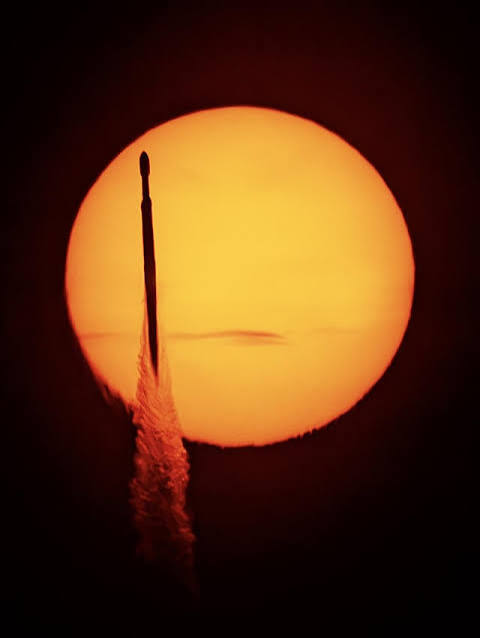
Le télescope spatial Nancy Grace Roman a décollé avec succès le 30 août 2026 à bord d’une Falcon Heavy de SpaceX depuis Cap Canaveral. Avec un champ de vision 100 fois supérieur à Hubble, il va cartographier l’énergie noire, les exoplanètes et des milliards de galaxies.
Un étage de fusée SpaceX s’écrase sur la Lune : la NASA photographie le cratère
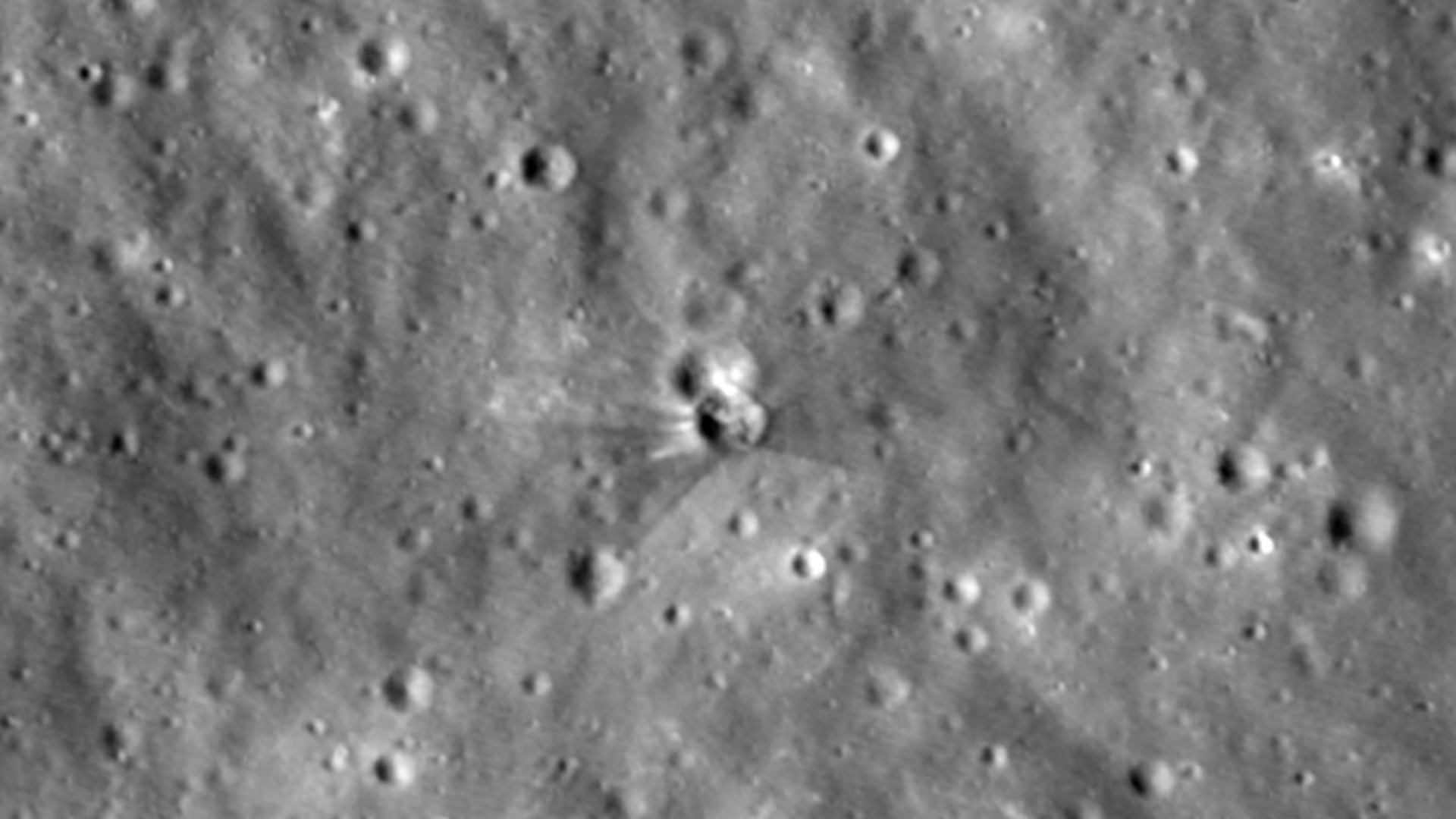
Le 5 août 2026, un étage supérieur de Falcon 9 a percuté la Lune à 8 690 km/h. La sonde LRO de la NASA a photographié le cratère de 18,3 mètres créé lors de l’impact.
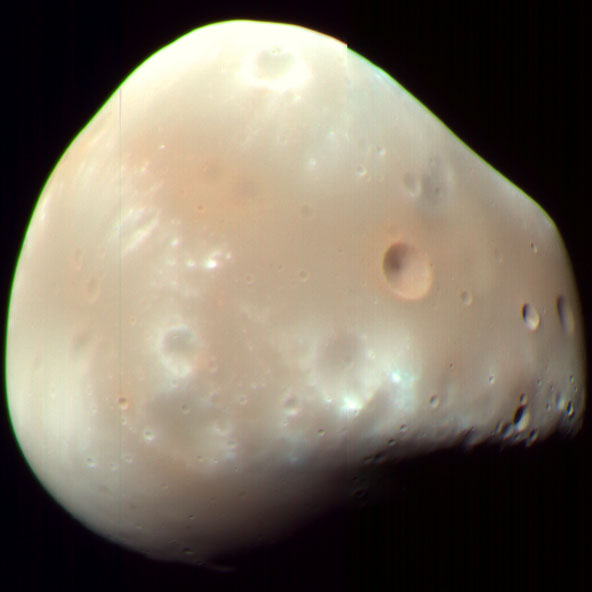
Un impact d’astéroïde unique pourrait expliquer l’apparence de Deimos
Un astéroïde de 320 mètres a frappé Deimos à 45 degrés, créant sa surface lisse et son bassin polaire sud, révèle une étude parue dans Nature Astronomy le 18 août 2026.