
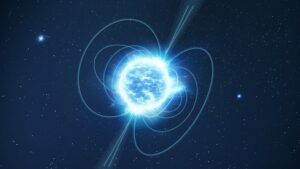
Pulsars are the ultra-compact remnants of massive stars. After a supernova, their core collapses to form a neutron star. These tiny objects rotate at breakneck speeds and possess a colossal magnetic field
. They emit beams of light that sweep across space, similar to the beam of a cosmic lighthouse. With each rotation, a pulsar sends a signal to Earth. We perceive this
beat as regular pulses, sometimes with a precision comparable to that of atomic clocks.
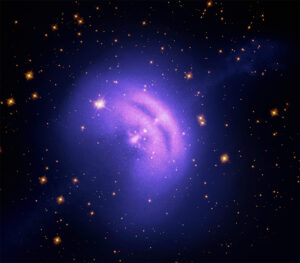
Pulsars have many faces. The fastest are millisecond pulsars. Their rotation sometimes exceeds 700 revolutions per second. They often result from a transfer of matter from a companion star.
Other pulsars are called young pulsars. They originate from recent supernovas. They rotate more slowly, but their magnetic field is much more powerful.
There are also magnetars. Their magnetic field is the strongest known in the universe. They sometimes emit violent bursts of X-rays and gamma rays.
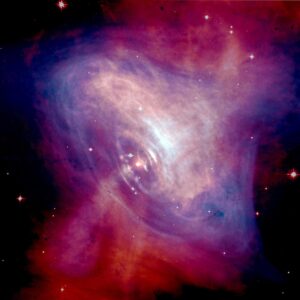
The Crab Pulsar is located at the heart of the famous M1 nebula, the remnant of a supernova observed by astronomers in 1054. This compact object rotates about 30 times per second and sends out regular pulses in radio, visible light, and X-rays.
Its colossal energy powers the entire nebula around it, illuminating its expanding gas filaments. Even today, it remains one of the most studied pulsars: a veritable natural laboratory for probing the extreme physics of collapsed stars.
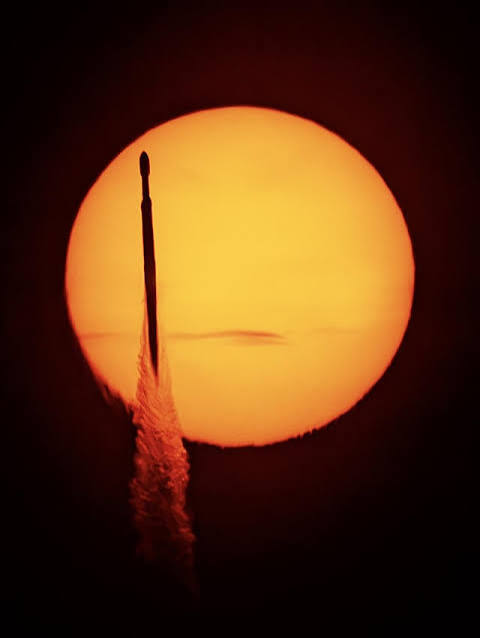
Le télescope spatial Roman de la NASA s’envole vers les étoiles
Le télescope spatial Nancy Grace Roman a décollé avec succès le 30 août 2026 à bord d’une Falcon Heavy de SpaceX depuis Cap Canaveral. Avec un champ de vision 100 fois supérieur à Hubble, il va cartographier l’énergie noire, les exoplanètes et des milliards de galaxies.
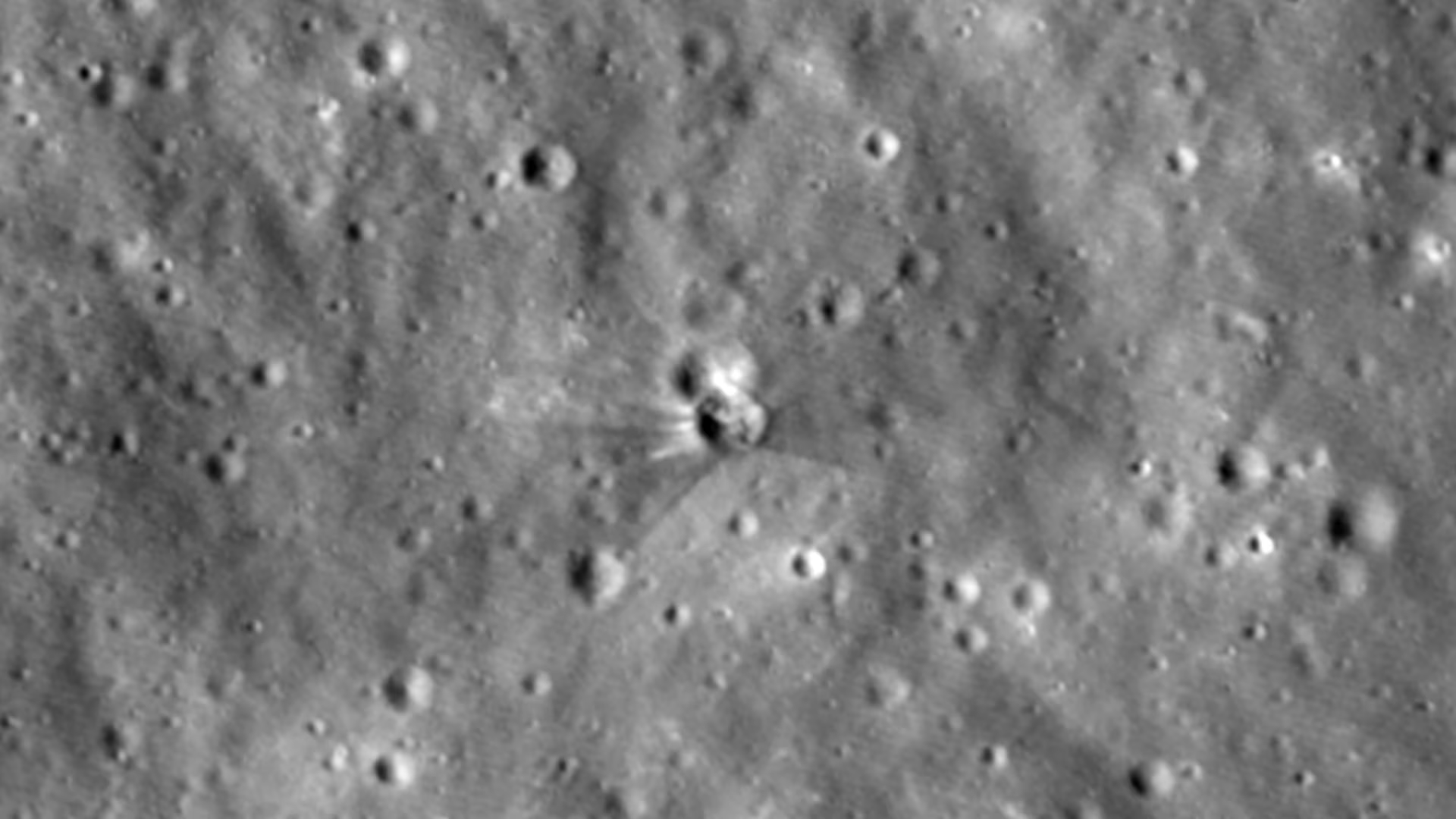
Un étage de fusée SpaceX s’écrase sur la Lune : la NASA photographie le cratère
Le 5 août 2026, un étage supérieur de Falcon 9 a percuté la Lune à 8 690 km/h. La sonde LRO de la NASA a photographié le cratère de 18,3 mètres créé lors de l’impact.
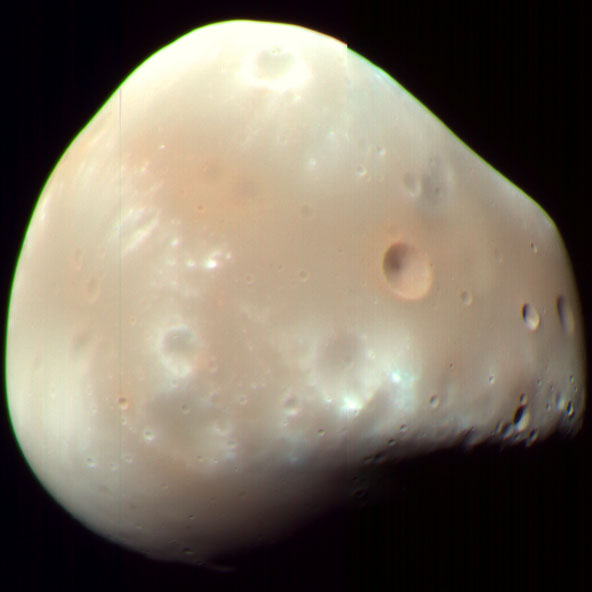
Un impact d’astéroïde unique pourrait expliquer l’apparence de Deimos
Un astéroïde de 320 mètres a frappé Deimos à 45 degrés, créant sa surface lisse et son bassin polaire sud, révèle une étude parue dans Nature Astronomy le 18 août 2026.