
Saturn: The Queen of Rings in the Solar System
In the symphony of the Solar System, Saturn stands out like a golden note suspended in the ether. The sixth planet from the Sun, it is a gas giant that is both majestic and light. Its diameter reaches nearly 116, 000 kilometers, nine times that of Earth.
Yet its density is so low that it could float on water. Its ice rings shine like a celestial jewel, visible even through a simple telescope. Thus, Saturn is not just a world: it is a spectacle of gravity and light, a perfect balance between matter and emptiness.
The Iconic Rings of Saturn
200,000 km wide, less than 1 km thick
The Foundations of the Golden Giant
Saturn is composed almost entirelyof hydrogen andhelium. These gases, born from the Big Bang, form a light but colossal structure. Its average density of 0.69 g/cm³ makes it the lightest planet in the Solar System.
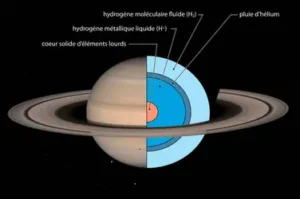
However, this apparent softness hides immense power. Beneath its golden clouds, pressure builds until hydrogen is transformed into a dense fluid. Deeper still, matter becomes metallic hydrogen — an electrical conductor that generates a planetary magnetic field.
The Kingdom of the Ice Rings
Saturn is surrounded by a spectacular ring system, unique in the Solar System. Composed of more than 90% water ice and dust, these fragments reflect sunlight like celestial mirrors. Each particle, from grains of sand to blocks several meters in size, orbits at its own speed, creating a fascinating gravitational harmony.
The rings, which are over 200,000 km wide but barely 1 km thick, are divided into several zones: A, B, C, D, E, F, and G. Each zone is influenced by neighboring moons, such as Enceladus or Mimas. In addition, the Voyager and Cassini probes have revealed sublime details: arches, moving shadows, and luminous whirlpools.
Ring formation: a mystery still under debate
The origin of the rings remains a mystery. Some scientists believe they originated from the disintegration of an ancient moon, destroyed by Saturn's tidal forces. Others suggest they are remnants of the primordial cloud that formed the Solar System. Whatever their origin, these rings remain one of the most moving spectacles in the cosmos.
The Invisible Heart of the Titan
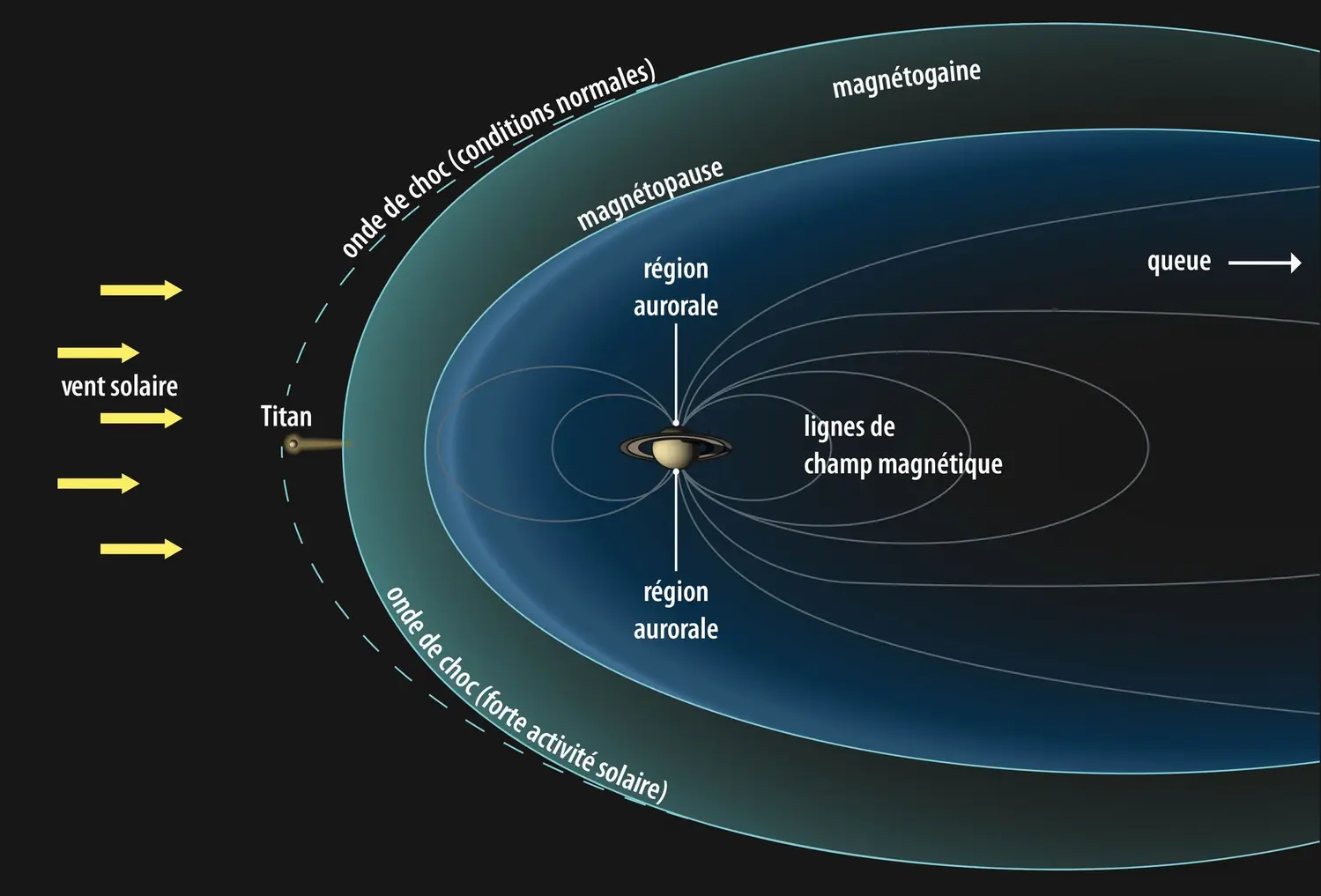
Beneath Saturn's clouds, a world of titanic pressures reigns. Hydrogen becomes liquid, then metallic, creating a vast ocean of electricity. This phenomenon gives rise to a powerful magnetic field, capable of deflecting particles from the solar wind.
At the center of the planet is a core of iron and silicates, possibly mixed with ice. This partially diffuse core is slowly dissolving into the liquid layers, blurring the boundary between rock and gas. Thanks to observations from the Cassini probe, scientists have come to understand that Saturn is not a static sphere. It is a world in transformation, where matter constantly mixes and reinvents itself.
Cassini and the Grand Ballet of the Moons
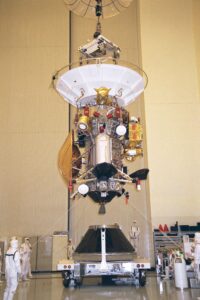
Since Galileo, Saturn has fascinated us with its beauty. But the Cassini-Huygens mission has transformed this fascination into knowledge. Launched in 1997, it observed Saturn, its rings, and its moons for thirteen years.
Huygens, the European probe, landed on Titan, revealing a world of liquid hydrocarbons and rivers of methane. Meanwhile, Cassini discovered the geysersof Enceladus, evidence of an active underground ocean.
The Major Moons of Saturn
Titan is Saturn's largest moon and the second largest in the Solar System. It has a dense atmosphere composed of nitrogen and methane, and lakes of liquid hydrocarbons on its surface. It is the only satellite in the Solar System to have such a developed atmosphere.
Enceladus is a small icy moon that ejects plumes of water vapor from its south pole. These geysers originate from an underground ocean that could harbor the conditions necessary for life. Cassini has detected organic molecules in these plumes.
Rhea is Saturn's second largest moon, composed mainly of ice. Iapetus, meanwhile, presents a strange dichotomy: one hemisphere is very dark and the other extremely bright, creating a striking contrast.
Mimas is famous for its gigantic impact crater, Herschel, which gives it a striking resemblance to the Death Star from Star Wars. This crater is about one-third the diameter of the moon itself.
Did you know?
- Saturn is the only planet with a density lower than that of water (0.69 g/cm³).
- A Saturnian day lasts approximately 10 hours and 33 minutes, while a year is equivalent to 29 Earth years.
- Its rings extend over 200,000 km, but are no more than one kilometer thick.
- The planet has more than 146 known moons, including Titan, Enceladus, Rhea, and Iapetus.
- Its average temperature is around -254°F, preserving the purity of its eternal ice.
Le télescope spatial Roman de la NASA s’envole vers les étoiles
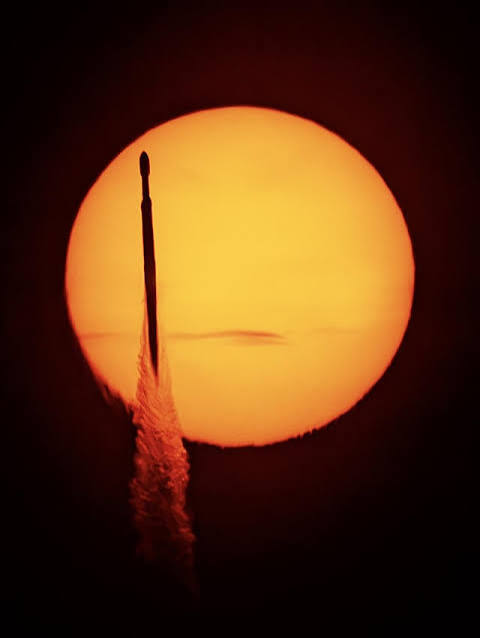
Le télescope spatial Nancy Grace Roman a décollé avec succès le 30 août 2026 à bord d’une Falcon Heavy de SpaceX depuis Cap Canaveral. Avec un champ de vision 100 fois supérieur à Hubble, il va cartographier l’énergie noire, les exoplanètes et des milliards de galaxies.
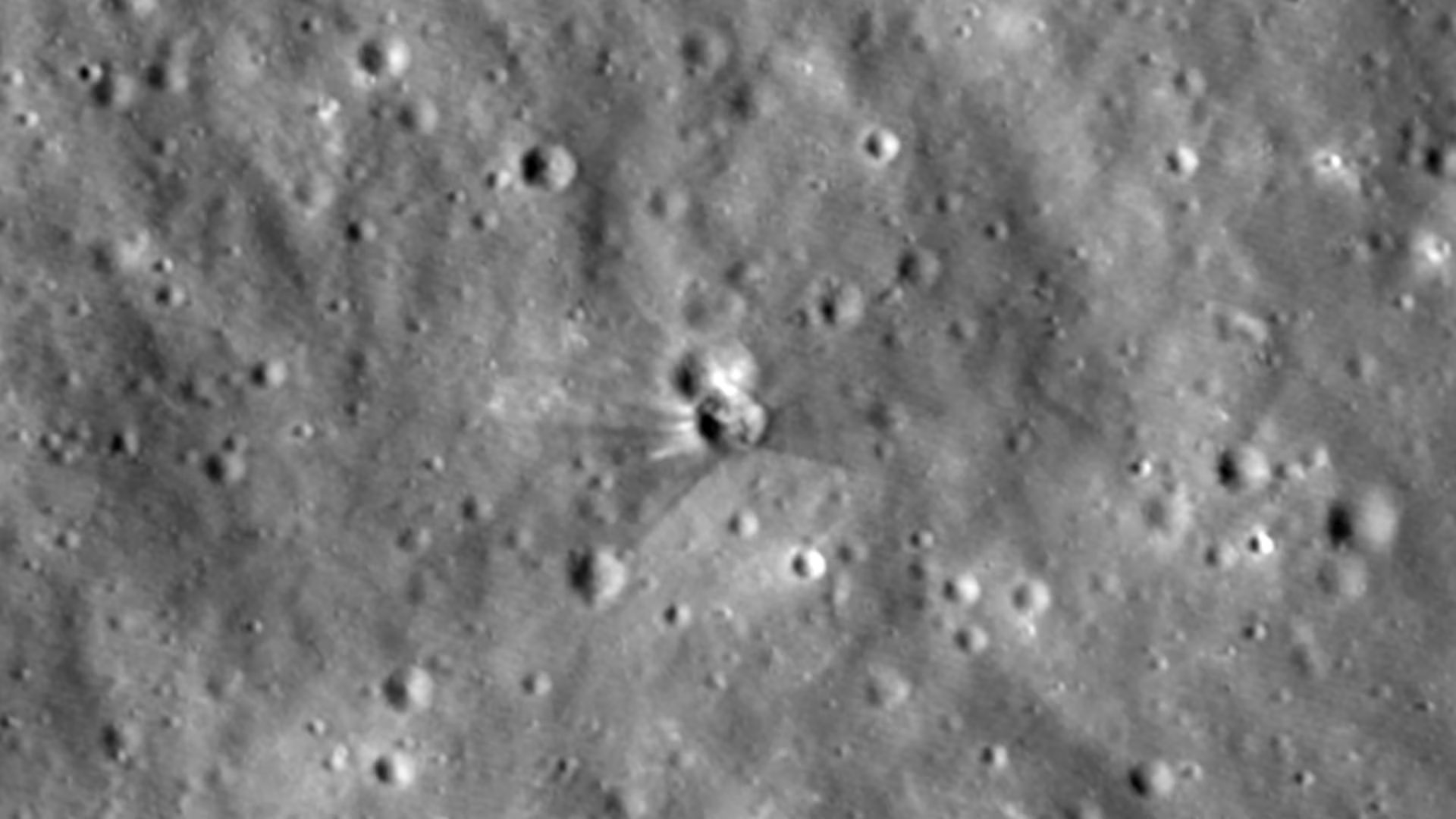
Un étage de fusée SpaceX s’écrase sur la Lune : la NASA photographie le cratère
Le 5 août 2026, un étage supérieur de Falcon 9 a percuté la Lune à 8 690 km/h. La sonde LRO de la NASA a photographié le cratère de 18,3 mètres créé lors de l’impact.
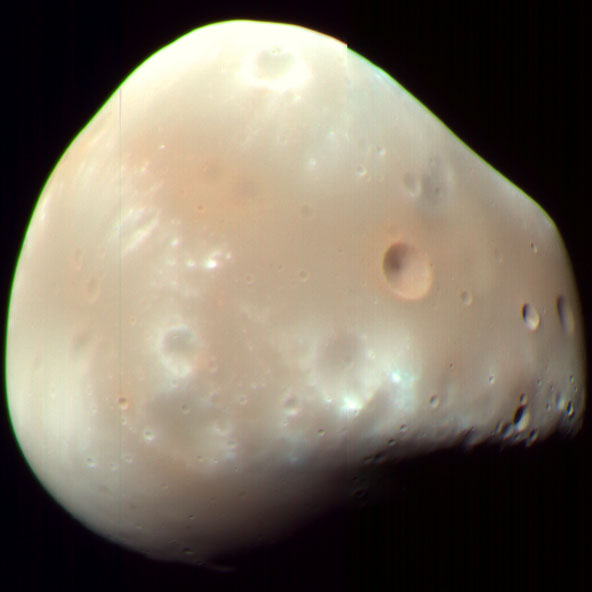
Un impact d’astéroïde unique pourrait expliquer l’apparence de Deimos
Un astéroïde de 320 mètres a frappé Deimos à 45 degrés, créant sa surface lisse et son bassin polaire sud, révèle une étude parue dans Nature Astronomy le 18 août 2026.