
Earth: The Blue Jewel of the Solar System
Earth, our planet, stands out for its beauty and uniqueness. Seen from space, it sparkles in a deep blue, woven with shifting whites and ochre continents. Often called "the blue planet, " it is home to the only known life in the universe. Yet this fragile balance is the result of a long and turbulent history.
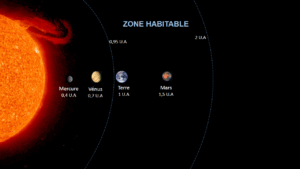
The Habitable Zone of the Solar System
Too hot
✓ Habitable area
Too cold
The Earth is located at the perfect distance from the Sun to maintain liquid water.
Located approximately 150 million kilometers from the Sun, Earth enjoys an ideal distance: neither too hot nor too cold. Its atmosphere, composed mainly of nitrogen and oxygen, plays an essential role in retaining just enough heat to keep water in a liquid state.
A Protective and Regulating Atmosphere
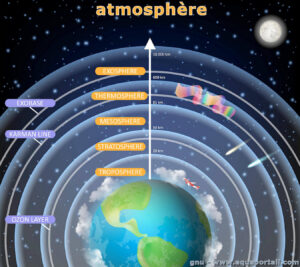
The Earth can support life primarily because of its atmosphere. Like a protective cocoon, it surrounds the planet like a thin blanket, shielding the surface from harmful radiation and regulating the overall temperature.
The Earth's atmosphere consists of several layers, each playing an essential role:
This is the lowest layer (0-12 km), where we live and where clouds and weather phenomena form. It contains 80% of the total mass of the atmosphere.
It is home to the ozone layer (15-35 km altitude), which absorbs much of the Sun's ultraviolet rays, thus protecting life on the surface.
It destroys most meteorites (50-85 km) by burning them up before they reach the ground, creating the famous "shooting stars."
Thermosphere: Traversed by polar auroras, it protects against charged particles.
Exosphere: Diffuse boundary with space (> 500 km).
Oceans, Sources and Regulators of Life
More than 70% of the Earth's surface is covered by water. The oceans, the planet's blue lungs, regulate temperature, transport energy, and produce much of the oxygen we breathe.
They are also home to an incredibly rich biodiversity, which remains largely unexplored. Ocean currents, such as the Gulf Stream, connect continents and moderate climates. In addition, the water cycle —evaporation, condensation, precipitation— ensures a constant redistribution of resources.
An Iron Heart and a Magnetic Shield
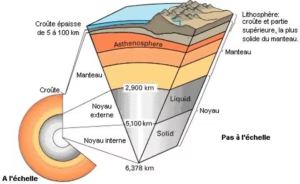
Beneath our feet, more than 6,000 kilometers deep, the Earth harbors a veritable core of molten metal. This core, composed mainly of iron and nickel, is divided into two parts: a liquid outer core, in perpetual motion, and a solid inner core.
This ballet of molten metal is the engine of the Earth's magnetic field. The convection currents of liquid iron create a phenomenon called a geodynamo, which generates a huge magnetic bubble—the magnetosphere.
The polar auroras: a luminous magnetic ballet
When solar particles enter the magnetosphere, they are guided toward the poles by magnetic field lines. Upon contact with atmospheric gases, they produce these luminous green, red, or purple veils that undulate across the night sky.

Earth Seen from Space
Since the 1960s, satellites have been observing our planet relentlessly. Programs run by NASA, ESA, and JAXA scrutinize ice, forests, oceans, and clouds. This data reveals a dynamic Earth that is constantly changing.
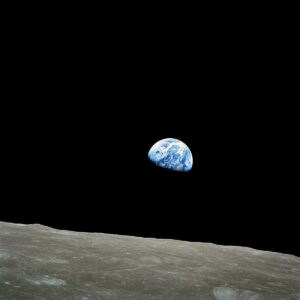
In 1968, the Apollo 8 mission captured the famous "Earthrise" image, showing the Earth rising above the lunar horizon. This strikingly simple vision changed our perception of the world forever.
Did you know?
- Earth is the only planet known to have liquid water on its surface.
- Its moon stabilizes its axis of rotation, preventing extreme climates.
- Its magnetic field protects life from solar radiation.
- Every second, approximately 100 lightning bolts strike somewhere on the globe.
- More than 1,500 volcanoes are still considered active today.
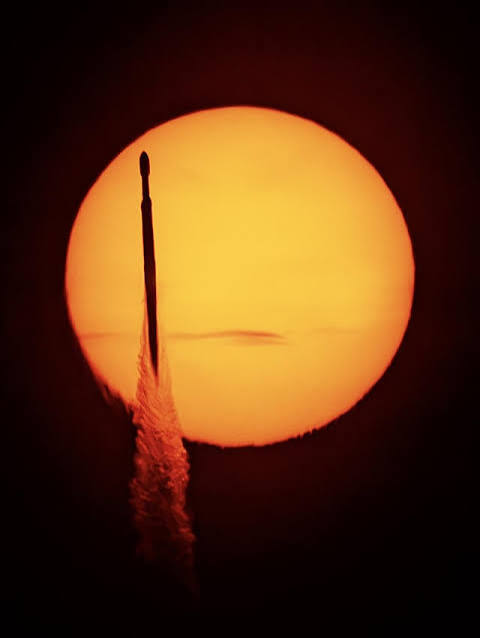
Le télescope spatial Roman de la NASA s’envole vers les étoiles
Le télescope spatial Nancy Grace Roman a décollé avec succès le 30 août 2026 à bord d’une Falcon Heavy de SpaceX depuis Cap Canaveral. Avec un champ de vision 100 fois supérieur à Hubble, il va cartographier l’énergie noire, les exoplanètes et des milliards de galaxies.
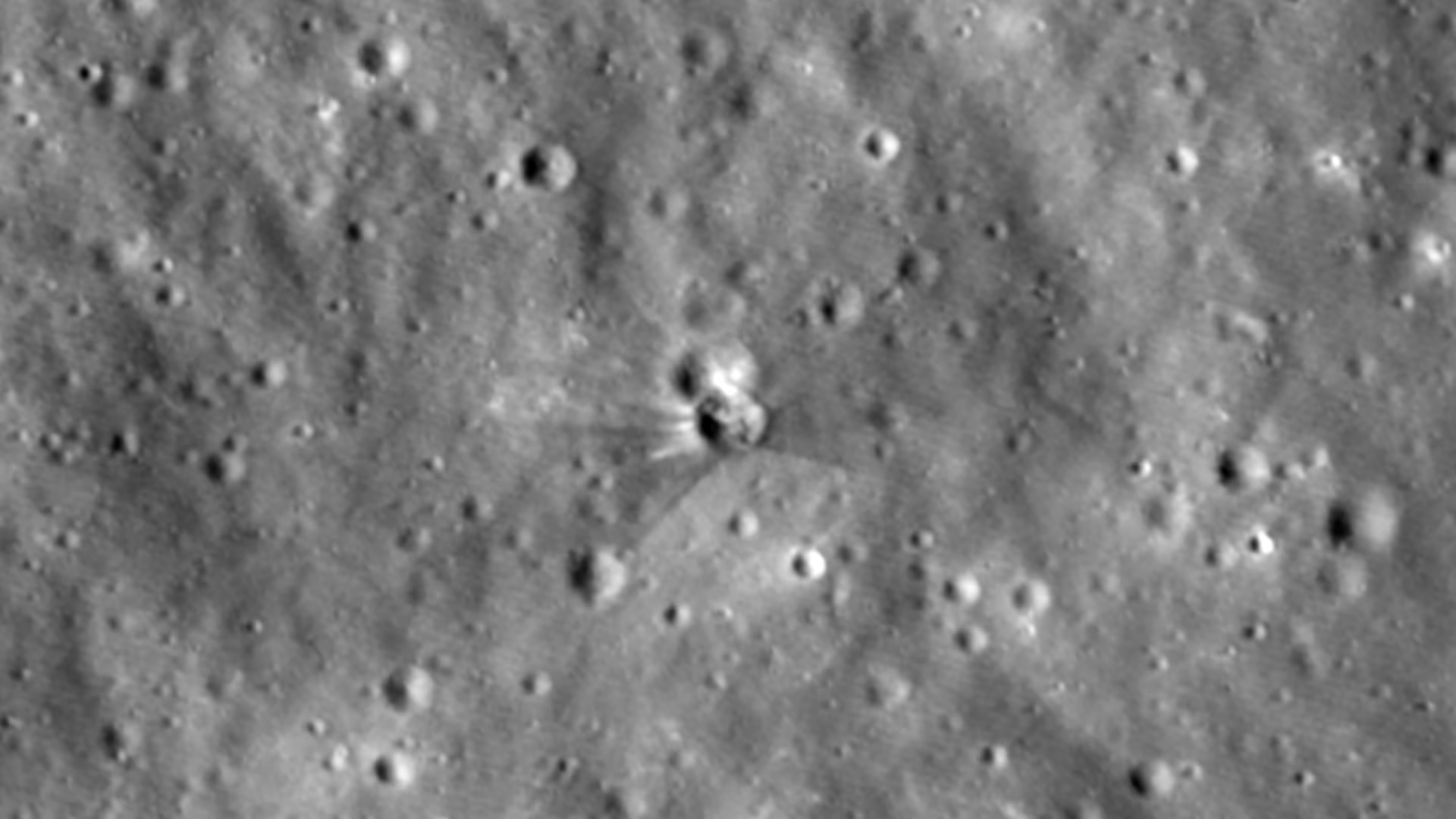
Un étage de fusée SpaceX s’écrase sur la Lune : la NASA photographie le cratère
Le 5 août 2026, un étage supérieur de Falcon 9 a percuté la Lune à 8 690 km/h. La sonde LRO de la NASA a photographié le cratère de 18,3 mètres créé lors de l’impact.
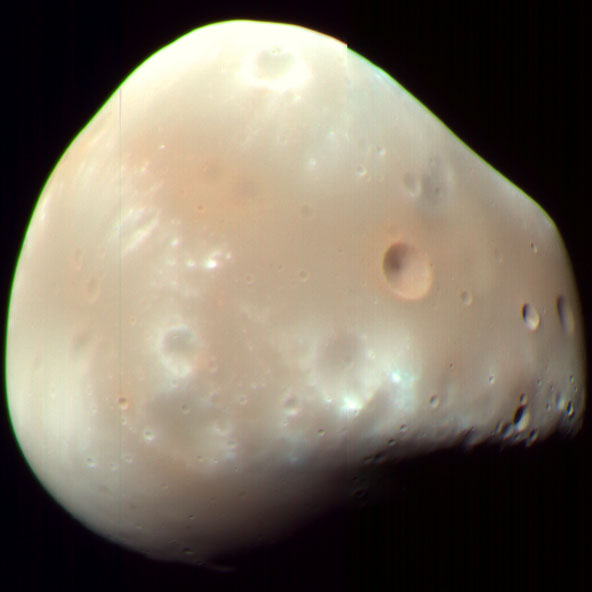
Un impact d’astéroïde unique pourrait expliquer l’apparence de Deimos
Un astéroïde de 320 mètres a frappé Deimos à 45 degrés, créant sa surface lisse et son bassin polaire sud, révèle une étude parue dans Nature Astronomy le 18 août 2026.