
Black holes are among the most enigmatic objects in the cosmos. They are born from extreme phenomena, sculpt the matter around them, and influence the evolution of galaxies. Although invisible by nature, their gravitational effects reveal their presence throughout the Universe.
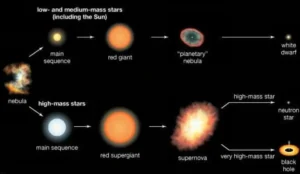
Most black holes are born from the death of a massive star. When its nuclear fuel is exhausted, its core collapses suddenly. The resulting supernova expels the outer layers, while the core collapses to become a stellar black hole.
Some, even more mysterious, could date back to the earliest moments of the cosmos: primordial black holes. Pure hypothesis for now, but they could explain part of the dark matter that shapes the large structures of the Universe.
Finally, at the heart of galaxies sit supermassive black holes, whose mass exceeds that of millions of stars. Their exact origin remains unknown. They are thought to have grown through successive mergers andgas accretion, becoming the true gravitational architects of modern galaxies.
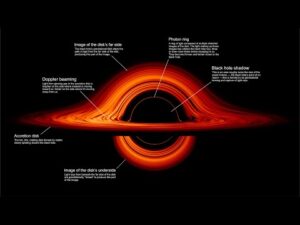
Around black holes, matter torn from their surroundings forms an accretion disk. Spiraling toward the center, the gas is compressed, accelerated, and heated to millions of degrees. At these extreme temperatures, it emits intense light—from visible to X-rays and gamma rays —allowing astronomers to detect an object that is otherwise invisible.
Under the influence of magnetic forces, some of the gas is sometimes propelled along the poles of the black hole in the form of relativistic jets. These columns of energy travel thousands of light-years, sculpting the space around them and influencing the evolution of galaxies.
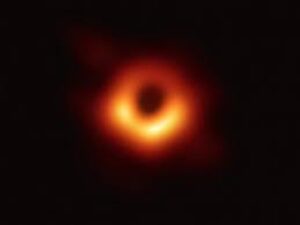
In 2019, the Event Horizon Telescope (EHT) project revealed the first image of a black hole: the one located at the heart of the M87 galaxy. The luminous ring surrounding its central shadow confirmed Einstein's predictions of general relativity with impressive accuracy.
The EHT is not a single telescope, but a global network of antennas spread across several continents. By synchronizing these observatories using ultra-stable atomic clocks, researchers recreate a single virtual telescope the size of the Earth, capable of resolving details that would otherwise be impossible to achieve.
This technical feat marked a major turning point: for the first time, humanity directly observed the silhouette of an event horizon, the boundary beyond which even light cannot escape.
Le télescope spatial Roman de la NASA s’envole vers les étoiles
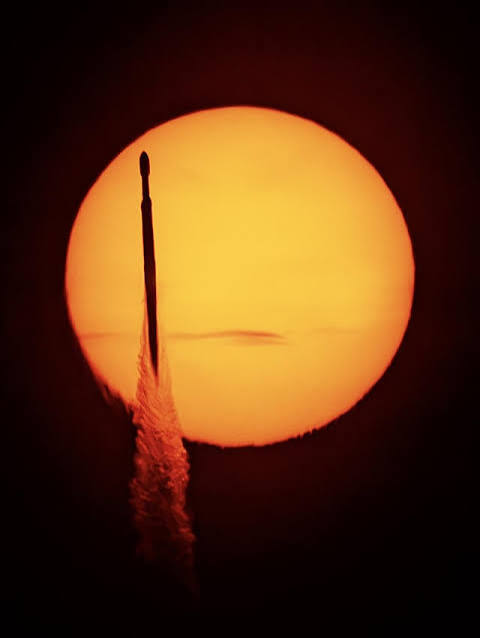
Le télescope spatial Nancy Grace Roman a décollé avec succès le 30 août 2026 à bord d’une Falcon Heavy de SpaceX depuis Cap Canaveral. Avec un champ de vision 100 fois supérieur à Hubble, il va cartographier l’énergie noire, les exoplanètes et des milliards de galaxies.
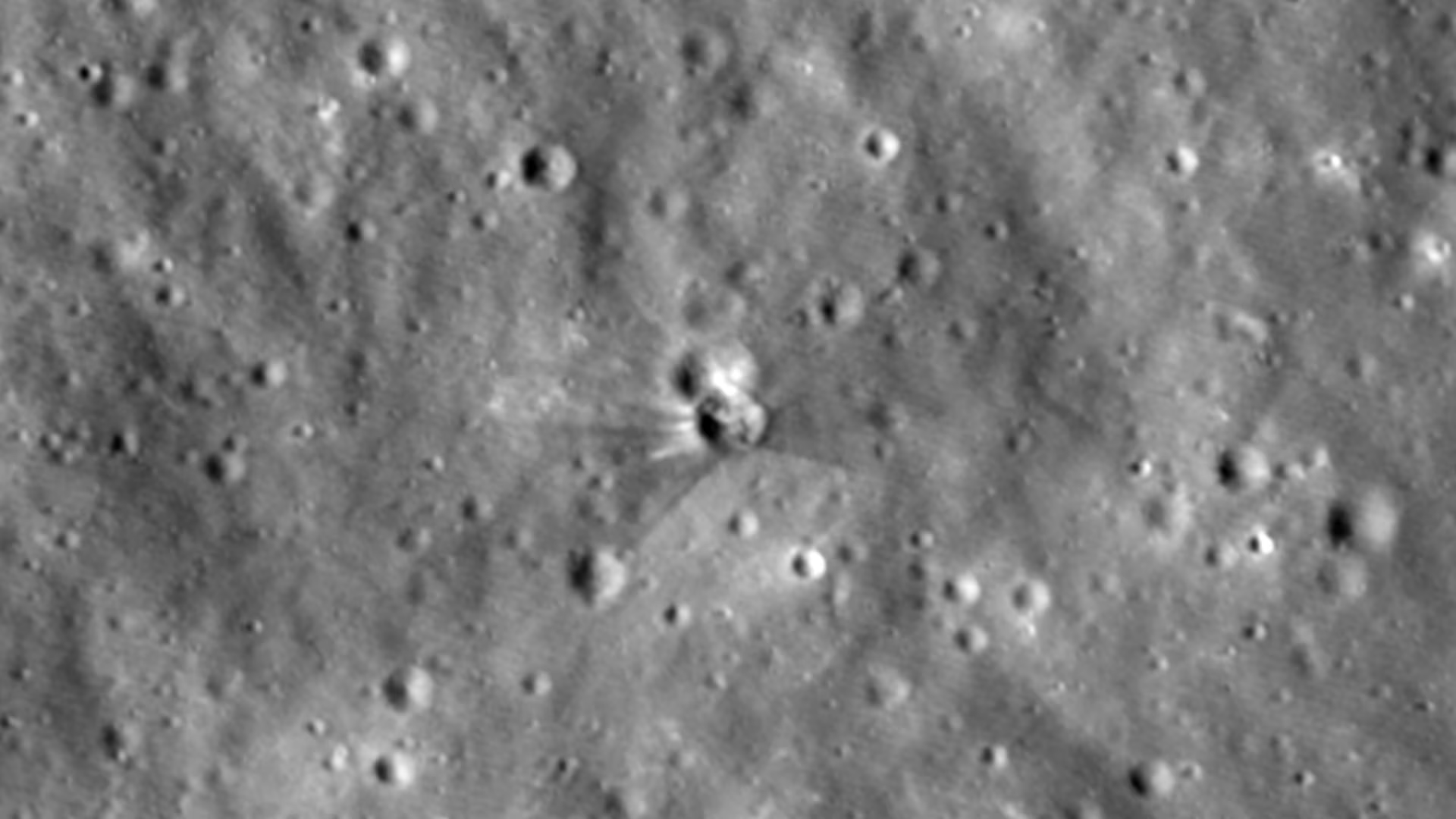
Un étage de fusée SpaceX s’écrase sur la Lune : la NASA photographie le cratère
Le 5 août 2026, un étage supérieur de Falcon 9 a percuté la Lune à 8 690 km/h. La sonde LRO de la NASA a photographié le cratère de 18,3 mètres créé lors de l’impact.
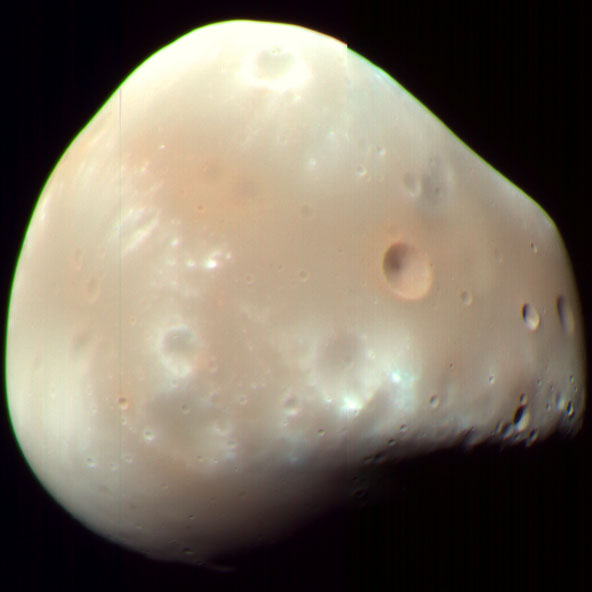
Un impact d’astéroïde unique pourrait expliquer l’apparence de Deimos
Un astéroïde de 320 mètres a frappé Deimos à 45 degrés, créant sa surface lisse et son bassin polaire sud, révèle une étude parue dans Nature Astronomy le 18 août 2026.